People tell me that I have a talent for Chado. But nobody is born being good at tea. When people are good at something, we assume that they must have a talent for it. This is not necessarily the case. We love to attribute success to talent. When we look at successful or professional athletes, we seldom think about the hours and hours of practice that they put in. My brother was an Olympic swimmer. He started competitive swimming at 5 years old. Growing up, he worked out 5 days a week for a couple of hours and competed on weekends. When he got to high school, he worked out twice a day, before and after school. When he got a college scholarship, he worked out three times a day, lifted weights, ran 3-5 miles every other day, and did psychological training twice a week. Did he have a talent for swimming? Yes, I think so, but to develop that talent it is hard to add up how much work was put into it to rise to the top caliber of his sport.
Passion vs. Facility
Just because people are good at something doesn’t mean they are passionate about it. Some people are good at something not because they are talented but because they want it and work hard for it. I had a friend who was very good at drawing. He used to do cartoons in school and would do portraits upon request. But he didn’t go on to develop that particular talent. He went on to play in a rock band and spent his time and passion playing music. He spent all his time learning and playing guitar, even though he was not as good as other guitar players. He still plays in a rock band to this day and is happy playing around town, recording music and occasionally doing regional road trips.
We have talent, but seldom put in the time
There are lots of talented people in the world, but talent only gets you so far. Developing the talent to the top ranks takes time, passion and practice. Even people without talent can develop amazing skills if they are dedicated and want it badly enough. Lots of things can get in the way of developing talent. Giving it up to pursue a passion, as my guitar friend did, or earning a living making more money in some other field, ordoing something else to fulfill other people’s expectations.
Passion as a motivator
When you have a passion for something, it will help motivate you to do the work that will help you improve. Passion for running will motivate you to get up and run even on days that you don’t feel like it. It will motivate you to continue running even if it is raining out, or too hot. Passion helps you through the set backs that inevitably will happen when you pursue a passion. I will write more at another time about how I found my passion in tea, and how I pursued my dream to become a teacher of Chado.
Focus
In the beginning of tea practice, I really sucked at everything. I could not fold the fukusa without it ending up a mess with corners flying. I had a hard time with foot work. I couldn’t sit down without my knees loudly banging on the floor. I despaired of ever moving in kimono in the tea room as lightly and gracefully as sensei. Because I wasn’t good at these things, I was reluctant to do them. Worst of all, I didn‘t focus on what I was doing. I didn’t pay attention to sensei’s instructions, I laughed off my mistakes and continued to make them. My mind would wander and sensei had to scold me, “Margie you are flying again, come back down to earth.” That is why she called me, The Flying Girl.
But I didn’t get better by coming to class every week, doing my temae and leaving. When I finally decided that I wanted to pursue a life in tea, I became very focused and started to come early, stay late, and help sensei whenever I could. And you know what? When I became serious, that is when sensei began to be more and more strict with me. She instilled the discipline I needed to practice and improve.
Practice
There is practice in just putting in the hours and there is effective practice. According to scientific studies, “effective practice is consistent, intensely focused and targeting of content or weaknesses that lie at the edge of one’s current abilities.” That’s another way of saying: Don’t waste your time practicing the stuff you already know, just to fill up those minutes. Practice with a mind set to improve whatever it is you are not good at.
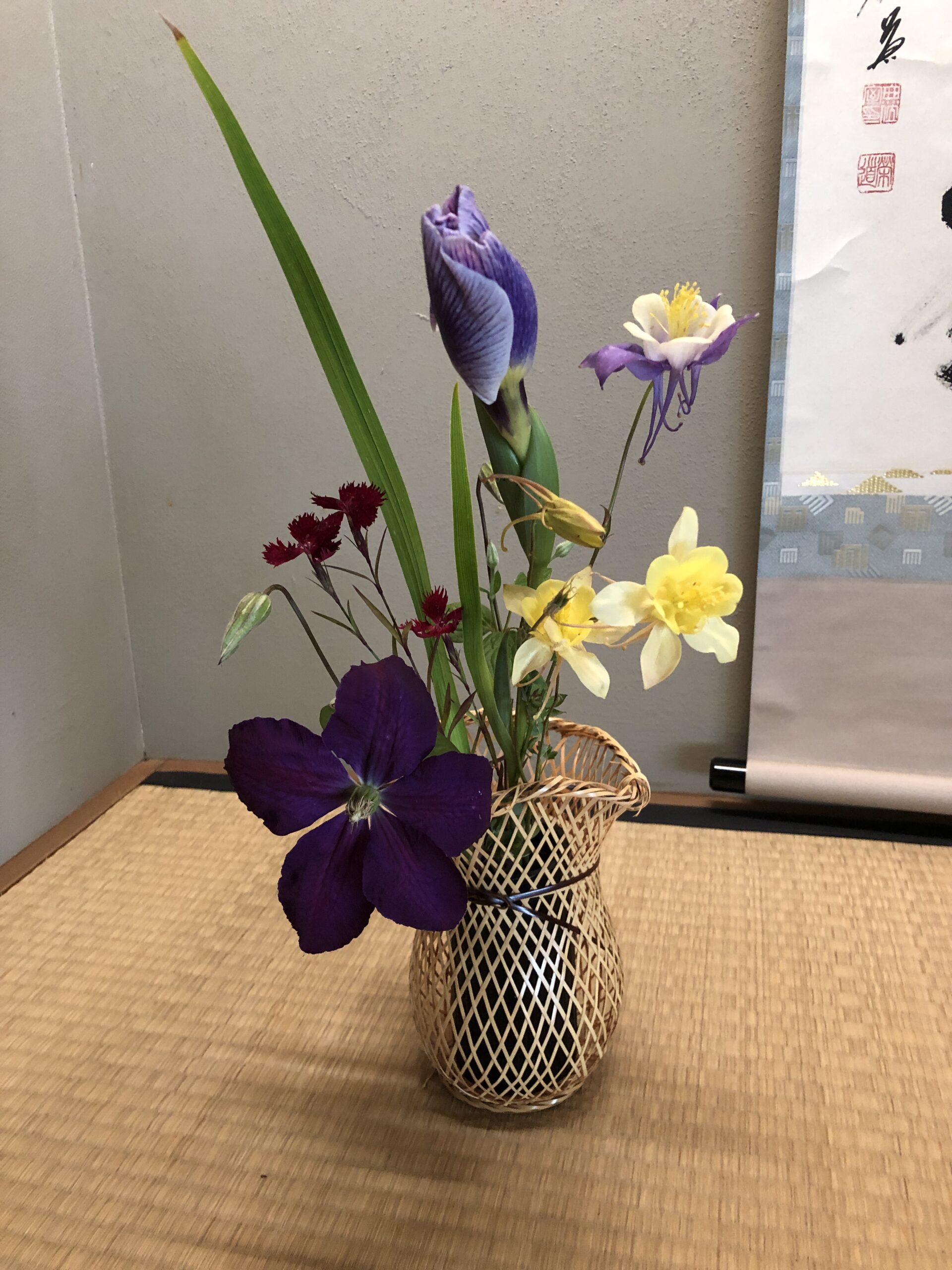
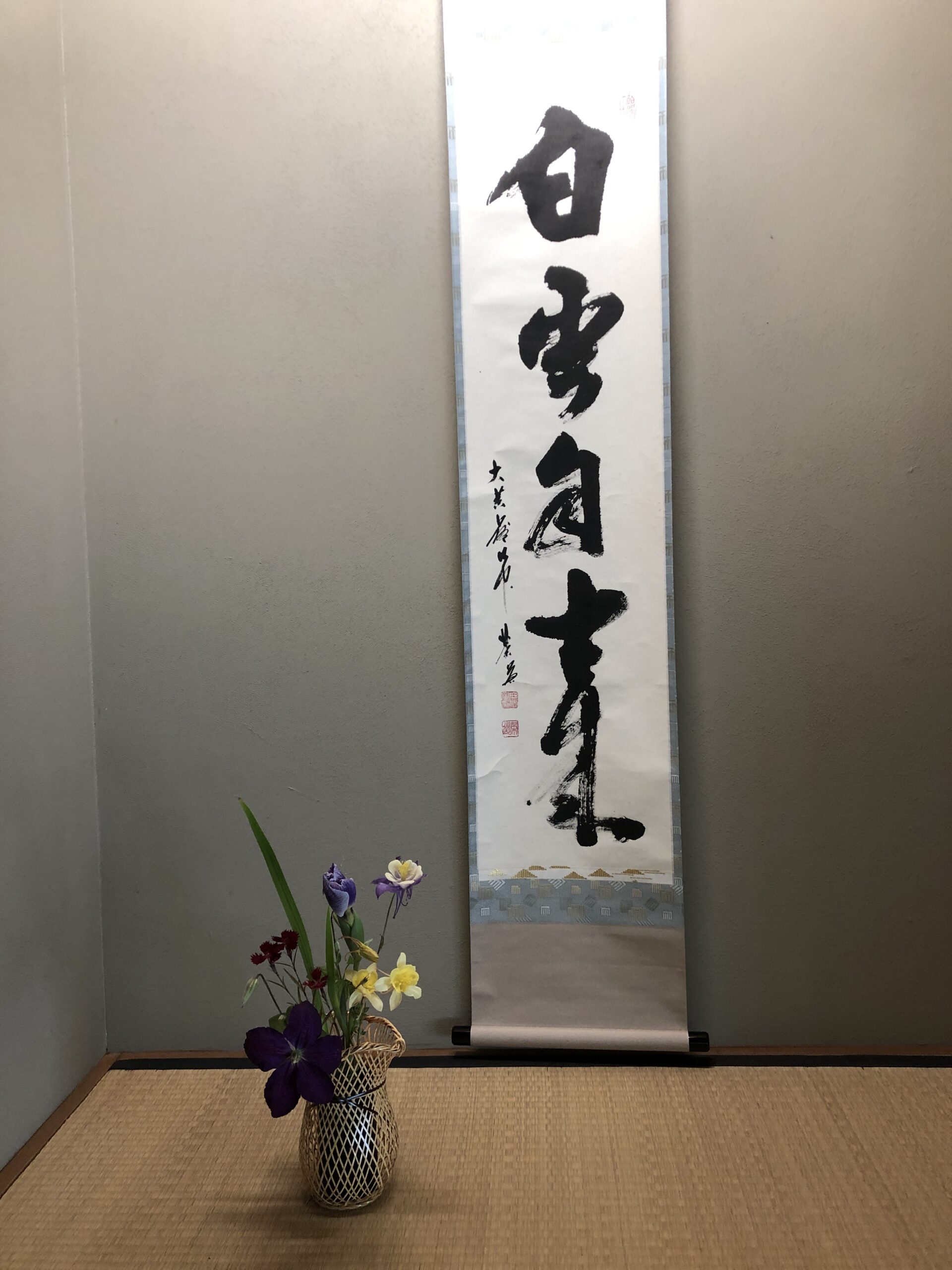
I know that arranging chabana is one of my weaknesses. As practice, I set myself the task of arranging chabana everyday for a year. Because I did not have a chabana garden, that meant that I had to go walking around the neighborhood, look in public parks, parking lots, empty lots, and industrial landscapes to look for material. Some days the only things I could find were weeds growing out of the sidewalk. I also looked at lots and lots of chabana arrangements made by other people. But after a year, I feel more confident in making chabana for the tearoom.
Teaching and doing
Often, I give my tea students assignments between classes. Sometimes it is to fold fukusa 30 times in front of a mirror before the next class, making sure that the corners are lined up and the top and bottom are the same width. Other assignments are to look around their life for something wabi and something sabi and bring it to class and explain why they think it is wabi or sabi. Whenever I give an assignment, I always do the assignment myself. I never ask students to do things that I wouldn’t do myself.
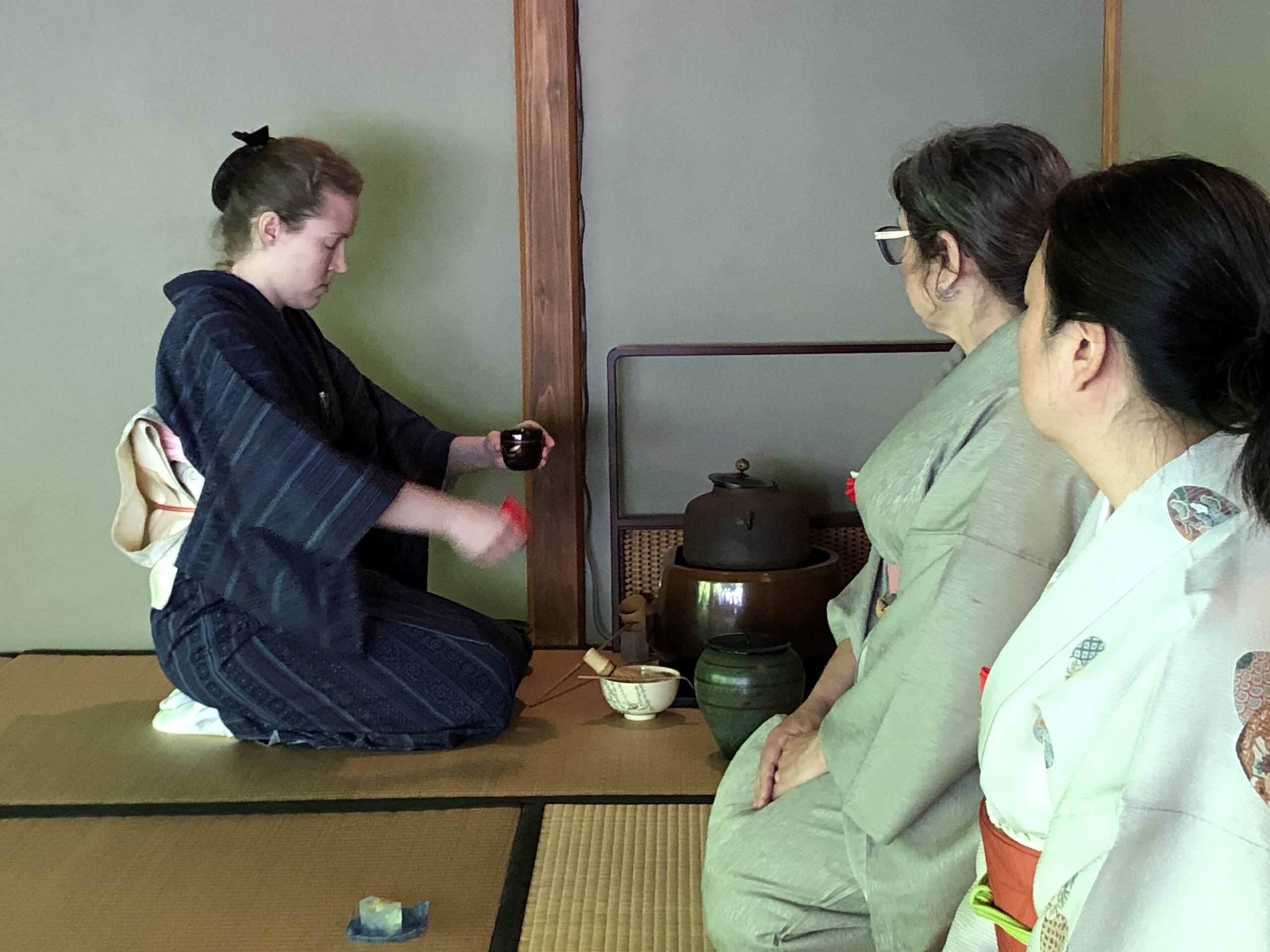
 For myself, I am living the tea life. I clean the tearoom and mizuya every day even if there is no class that day. I workout and I sit every day to keep my knees in shape for sitting seiza. I dress in kimono for every class. I make sweets for every class. I put on at least 2-3 demonstrations of tea a month and I invite people who have never seen tea ceremony before to share a bowl of tea with me in my tea room.
It is my passion that I practice every day. Some people say I have a talent for tea.

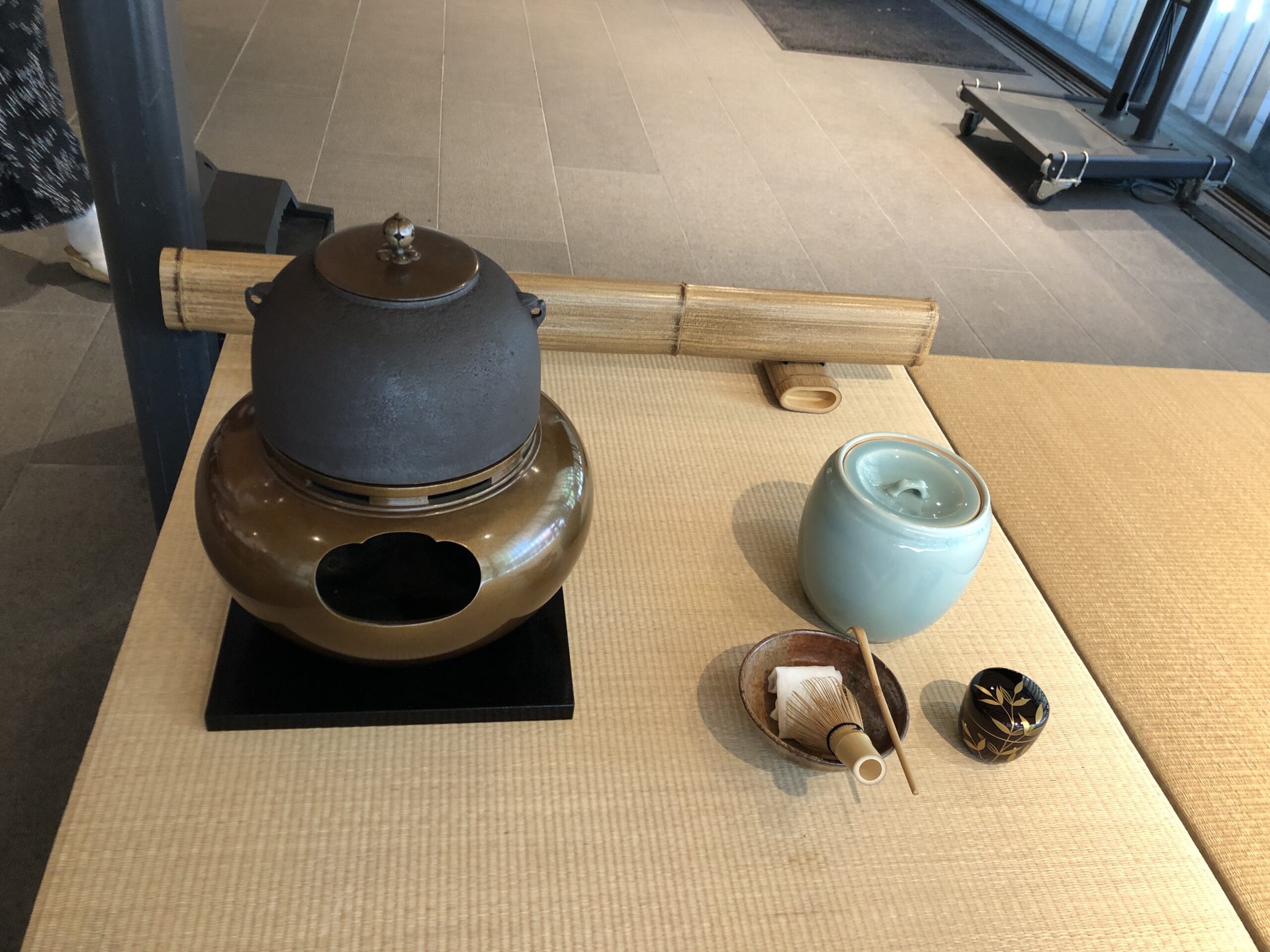
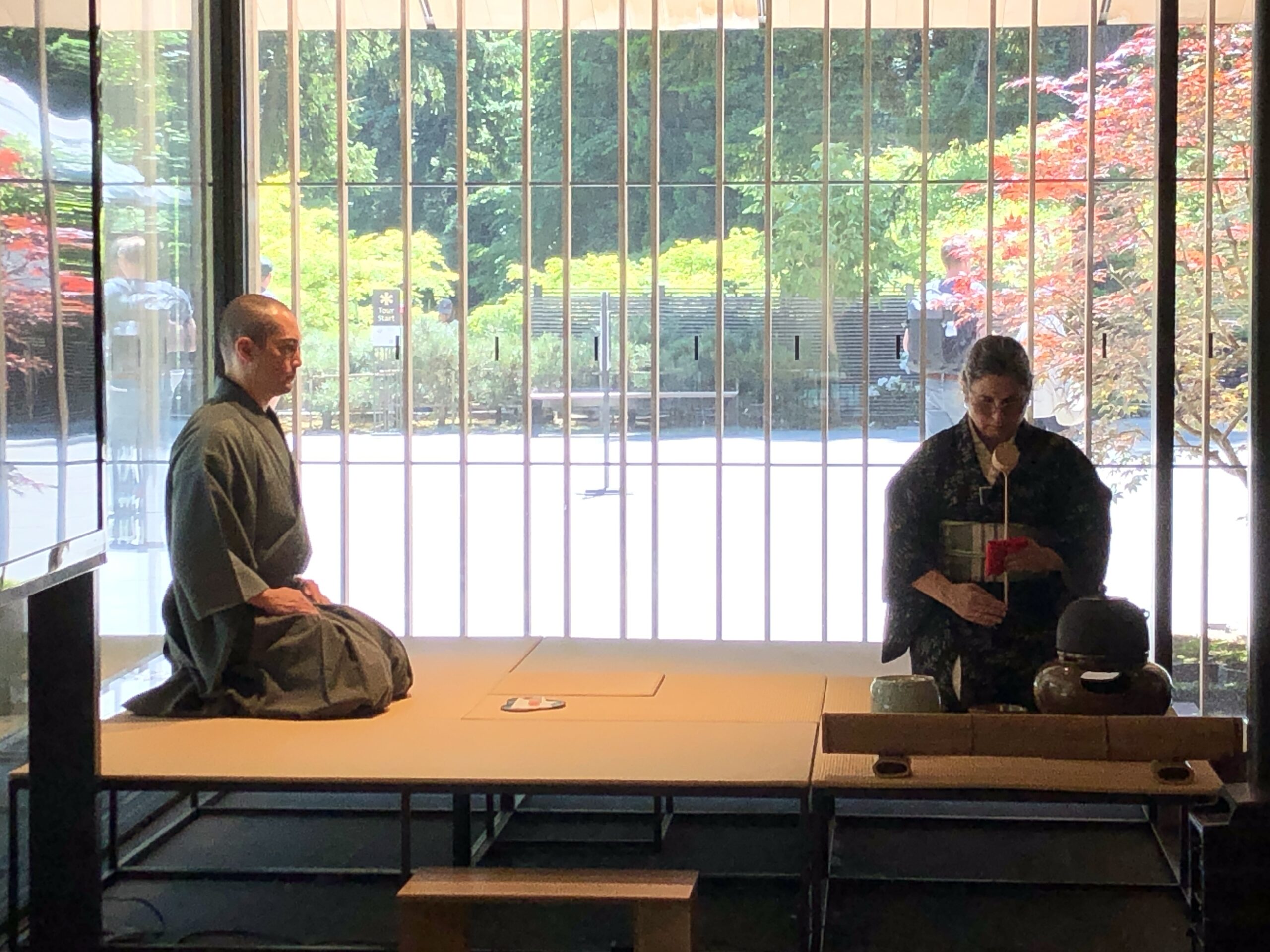
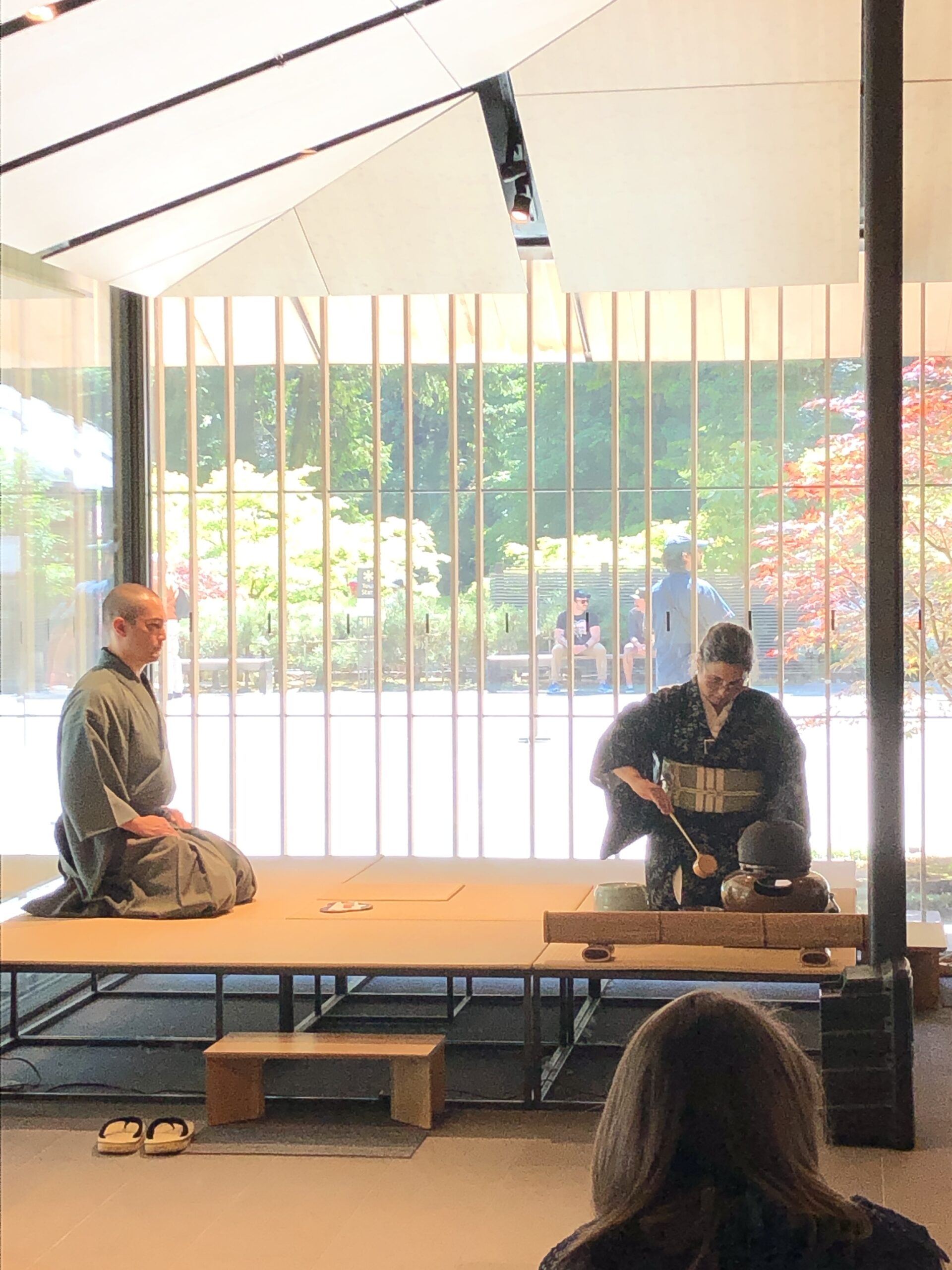
 The Portland Japanese Garden invited Yoshitsugu Nagano sensei of Ueda Soko school from New York City to come and present tea at the Cultural Corner floating tatami space. It is always interesting to watch other school’s temae to compare the different styles of making tea. And I think that is what it is, stylistic differences. The history of Chado is the same, the seasons of Japan are the same, the philosophy of zen and tea are the same, and largely the utensils and procedures are very similar. Most importantly, sweets and tea are the same.
  We enjoyed a casual dinner with members of Kashintei kai, the group of tea practitioners who help to maintain Kashintei, the teahouse at the Japanese Garden. This group also hosts a private chakai once a month for members and presents public tea once a month. Nagano-sensei had two students accompanying him from New York, Chie Ogura and Minji Koo, and we had a lively exchange over food, sake and wine.
  Later in the week, Nagano-sensei came to Issoan, where I hosted him and two other students who traveled from New York to assist him. I had been given a gift of shincha, fresh tea from this year’s harvest, so I shared it with my guests. We enjoyed sweets and usucha, Urasenke style. To my surprise, sensei made a bowl of tea for me Ueda Soko style. It is not often that other people make tea for me, and I was astounded how good it tasted.
 Afterwards, we had a wonderful discussion of bringing tea to people in America, teaching students about Japanese culture and tea. Through all of this, I formed friendship with him and his students, Wentao Wu and Suzy Wang. I also secured an invitation to tea the next time I am in New York. Thank you Yoshitsugu Nagano sensei. I will take you up on the invitation!